
Therapy Approaches & Modalities

7 Emotionally Focused Therapy Techniques for Couples Therapists
Seven practical EFT techniques for couples work, from mapping the negative cycle to the softening moment. Includes a free worksheet and a done-for-you workbook for therapists. Two people sit across from you. They have done this before; the same argument, the same silence, the same drive home where neither of them speaks. By the time they're in your room, they've each privately decided the problem is the other person. Emotionally Focused Therapy, developed by Sue Johnson, starts from a different
Why Psychoeducation Handouts Might Be the Most Underused Tool in Your Therapy Kit
A practical guide to psychoeducation handouts for therapists. What they are, why they work, the different formats, and how to choose the right one for the right client moment. Your client has just described the same pattern for the third session running. They understand it in the room with you. They nod. They can articulate it back. And then they go home, and the understanding disappears under the weight of their actual week. It's not that they're not trying. It's that a verbal explanation in a
How to Use Therapy Worksheets More Intentionally in Session
There is a particular kind of worksheet guilt that most therapists know well. You found a good one online. Maybe you even made one yourself. You printed it, handed it to your client, watched them scan it politely, and then spent the next session noticing it had not really landed. It sat on their kitchen table. Or in their bag. Or got lost entirely. The worksheet was fine. The timing was off, or the setup was missing, or there was no real bridge between the paper and the work you were doing toget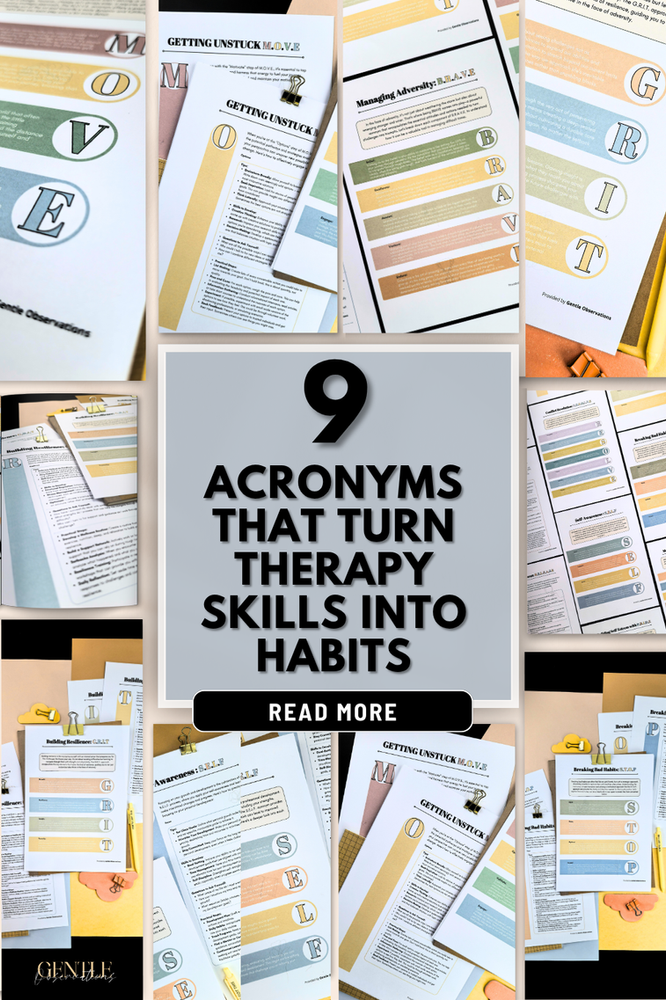
9 Acronyms That Turn Therapy Skills Into Habits
Relationships & Communication, Teens & Adolescents (Ages 13-19), Adults (Ages 20+), Therapeutic Tools & ResourcesCommunication, Coping Skills, WorksheetsWhy Clients Forget Skills After Session: Understanding the Challenge Have you ever noticed how clients can fully grasp a skill during a session, but when a stressful moment arises, it seems to vanish? They may nod along, practice the steps with you, and even feel confident leaving the room. Yet later, when they need the tool most, their mind goe
Motivational Interviewing in Tough Sessions: 7 Strategies That Work
You know the theory. You’ve had the training. And you’ve seen Motivational Interviewing work beautifully in session after session. But then there's that one client who keeps circling the same issue, week after week. No forward motion. No shift in motivation. Just a loop of "maybe," "not yet," or "I don't know." That loop? It can leave you feeling stuck, too. When that happens, it doesn’t mean you’re doing anything wrong. It just means something’s getting in the way, and it might be time to shift
Why Avoiding Your Emotions Isn’t Working-and What ACT Suggests Instead
If you've ever caught yourself thinking, "I just need to stop feeling this way," you're not alone. Most of us learned somewhere along the way that uncomfortable emotions should be fixed, avoided, or pushed aside. And when that doesn't work, when the anxiety is still buzzing, or the sadness won't lift, it's easy to feel stuck or even like you're doing something wrong. But here's the thing: your emotions aren't problems to be solved. They're messengers. And trying to silence them often adds more s
8 EMDR Phases, 1 Toolkit: What Every Therapist Needs at Their Fingertips
That moment when you’re not sure whether to keep going or circle back... You know the one. You’re mid-session, deep in the desensitization phase, and suddenly your client seems overwhelmed, shuts down, or starts looping. Do you pause and return to resourcing, push forward, or switch targets entirely? Even when you’ve done this work for years, those moments can feel uncertain. EMDR gives you a clear roadmap, but that doesn’t mean the road is always smooth. Real people bring real complexity, memor
30+ Trauma Tools Every Therapist Needs (And When to Use Them)
Some sessions feel like a breakthrough. Others feel like you're walking in circles — stuck in the same story, the same shutdown, the same silence. And even though you know the theory, there are days when it feels like your trauma tools just aren’t quite landing. Working with trauma is layered, unpredictable, and often emotionally exhausting. But sometimes, what makes the biggest difference isn’t a brand new modality — it’s having something simple, supportive, and ready-to-use at just the right m
5 Common Cognitive Distortions in Teen Depression (And How to Reframe Them)
Have you ever had a teen client shut down the moment you bring up their thoughts or feelings? You’re not alone. Engaging teens in therapy can feel like navigating a maze - especially when it comes to exploring their inner world. Teens often struggle to articulate what’s going on in their minds. Whether it’s the pressure to fit in, academic stress, or personal insecurities, it’s not uncommon for them to get lost in their own thoughts. And when those thoughts are distorted - like believing they’re
6 IFS Tools Every Therapist Wishes They Had in Session (And Now You Can!)
You Know the Model. Now You Need the Tools. You’ve done the trainings, read the books, and practiced the model. Internal Family Systems just clicks for you — the language of parts and Self feels like home. But even when you know the framework inside and out, there are still those moments in session when you find yourself thinking, “I wish I had something ready to help me with this part work right now.” Maybe your client just discovered a critical manager for the first time and you want to help t
20 Maladaptive Schemas and How to Support Each One With This Therapy Workbook (Freebie Included)
When clients get it—but still stay stuck You know that moment in therapy when a client can clearly name their patterns? They know they’re always anticipating abandonment, or they recognize they constantly seek validation from others, or they admit they’re avoiding anything that might expose their fear of failure. They’re aware. Insight is there. And yet... they’re stuck. This is where the work gets tricky, right? It’s one thing to help clients identify their maladaptive schemas—it’s another to h
3 Steps to Move Clients from Conflict to Clarity Using the Empowerment Triangle
A Moment You’ve Probably Witnessed Before… “I’m just trying to help, but nothing I do is good enough.” You’ve heard this in session before—maybe more times than you can count. One partner is worn down from constantly trying to smooth things over. The other is frustrated, feeling unheard or controlled. And as they both speak, you can almost see the invisible roles taking shape. One starts to sound like the Victim, the other the Persecutor, and before long, they’ve switched places. What started as
14 Practical Somatic Therapy Strategies for Adults and Kids
Trauma doesn’t just affect the mind—it lives in the body. As a therapist, you’ve likely seen this firsthand: a client’s shoulders tensing as they recount a painful memory, or a child unable to sit still because their nervous system is in overdrive. You know there’s more to healing trauma than talking it through, but figuring out how to bridge that gap can be a challenge. How do you help clients reconnect with their bodies in a way that feels safe? What tools can you use to guide a child through
Stick to Your New Year's Resolutions with the Stages of Change Model
It’s that time of year again. The New Year brings a wave of fresh starts and ambitious resolutions. You’re excited, determined, and ready to make this year different. But maybe you’ve noticed a familiar pattern—by February, that initial motivation starts to fade, and old habits quietly creep back in. The truth is, meaningful change doesn’t happen overnight, and without the right tools, even the best intentions can fall apart. That’s where the Stages of Change Workbook comes in. This resource is
Compassion Focused Therapy Tools: Psychoeducational Sheets to Help You Thrive
You’re scrolling through your day, juggling a mix of work responsibilities, family duties, and personal to-do lists. Somewhere in the rush, you realize it’s been a long time since you paused to check in with yourself. If that sounds familiar, you’re not alone—and it’s precisely where Compassion Focused Therapy (CFT) comes in. CFT offers a way to understand and balance the different emotional systems that shape how we react to life’s ups and downs. It’s not just about feeling better but about tru
SFBT Free PDF: Scaling, Miracles, and SMART Goals for Therapists
As mental health professionals, one of the most rewarding yet challenging parts of our work is helping clients set and achieve meaningful goals. Whether it’s overcoming a longstanding issue, improving emotional regulation, or simply navigating the ups and downs of everyday life, goal-setting is a key element of the therapeutic process. But we know it’s not always easy. Some clients may be unsure about their goals, others might be resistant or overwhelmed by the idea of making lasting change, and
OCD Treatment Simplified: Practical Tips and ERP Techniques for Therapists
When you think of OCD, your mind might immediately picture someone obsessively cleaning their hands or checking if the door is locked for the fifth time. But OCD, or Obsessive-Compulsive Disorder, goes far beyond just rituals and habits we often see portrayed. For those living with it, OCD can be a deeply disruptive and misunderstood condition. As therapists, it’s easy to see how the complexities of OCD can be overshadowed by these surface-level stereotypes. In reality, OCD can manifest in count
Why Every Therapist Needs the Trauma Measuring Tool
Imagine sitting across from a client who has experienced profound trauma. They struggle to find the words to express the depth of their pain, and you wish there was a way to help them articulate their experience. Trauma is complex and multifaceted, affecting each person differently. As therapists, we often seek tools that can aid in understanding and processing these intricate layers of trauma. This is where the Trauma Measuring Tool comes into play. It’s designed to bridge the gap between the u
15 Effective Activities to Break the Cycle of Depression: A Guide for Therapists
As a therapist, you are undoubtedly familiar with the profound challenges that depression can pose to your clients. The experience of being stuck in a never-ending cycle of depression, where each day feels like a repeat of the last, can make finding a way out seem impossible for them. However, there is hope. By equipping your clients with the right strategies and tools, you can help them break free from this cycle and reclaim their lives. In this blog post, we will explore 15 powerful activities
Mastering Motivational Interviewing: A Therapist’s Guide to Effective Change
Have you ever found yourself at a crossroads with a client, feeling stuck in the cycle of ambivalence? You're not alone. Motivational Interviewing (MI) has become an invaluable tool for therapists like us, navigating the complexities of client motivation and behavior change. Whether you're new to MI or have been using it for years, sometimes we all need a little reminder or a fresh perspective on how to integrate it more effectively into our practice. In this blog, we're going to dive deep into
Practical IFS Techniques to Enhance Your Therapy Sessions
Ever wondered why everyone is talking about Internal Family Systems (IFS)? Well, here's the scoop! Imagine a therapy approach that not only helps your clients understand themselves better but also transforms their internal conflicts into harmonious interactions. That's exactly what IFS does, and it's no wonder therapists everywhere are buzzing about it. In this post, we’ll dive into the world of IFS, uncovering what it is, why it’s generating so much excitement, and how it can be a game-changer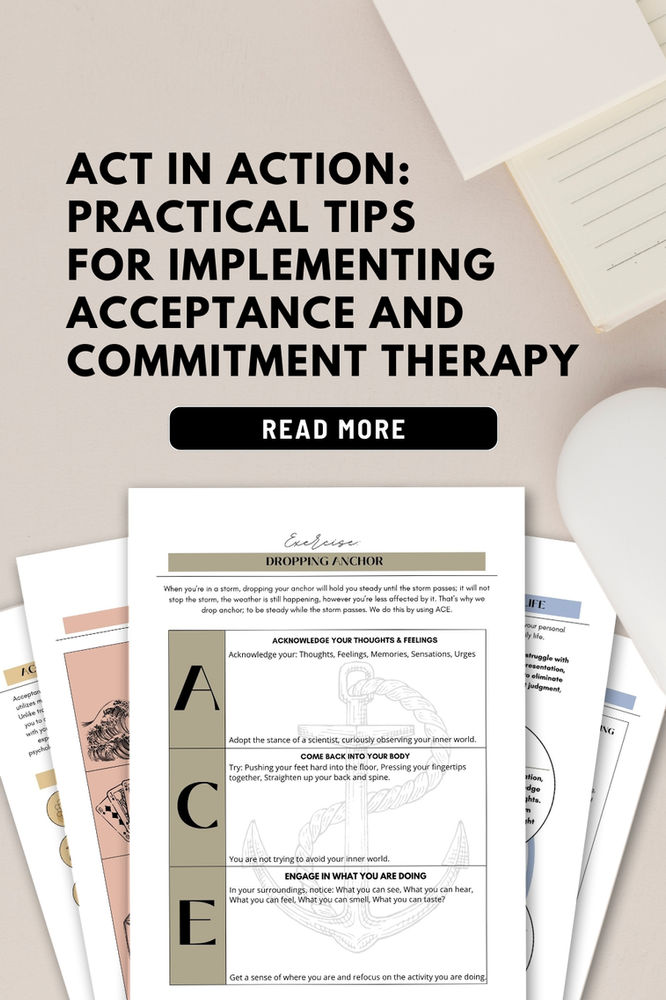
ACT in Action: Practical Tips for Implementing Acceptance and Commitment Therapy
Have you ever found yourself searching for effective, practical techniques to help your clients navigate their challenges? Acceptance & Commitment Therapy (ACT) offers a rich toolkit of interventions designed to foster psychological flexibility and resilience. Whether you're new to ACT or have already started incorporating its principles into your practice, understanding and utilizing these interventions can profoundly impact your clients' progress. In this post, we'll delve into six key ACT int
4 Practical Resources to Understand and Manage Shame, Guilt, and False Guilt
Have you ever found yourself tangled in a web of emotions, struggling to differentiate between feeling ashamed, guilty, or even burdened by a sense of false guilt? You're not alone. These emotions are complex, yet understanding them is crucial for our emotional well-being and personal growth. Imagine having a clear map that guides you through these feelings, helping you use the right terminology and, ultimately, fostering a deeper sense of self-awareness. That's exactly what we'll explore in thi
The Drama Triangle Workbook: Tools for Relationship Transformation
Have you ever felt trapped in a cycle of conflict or negativity in your relationships? Do you find yourself continuously in heated arguments, feeling attacked, getting defensive, or trying to diffuse the situation without understanding how you got there? These roles, known as the Victim, Persecutor, and Rescuer, are central to the Drama Triangle. But fear not, understanding this triangle is the first step toward breaking free from its grasp. In this blog post, we're going to unravel the complexi
Caring vs. Carrying: Recognizing Signs of Compassion Fatigue
Have you ever sat across from a client who seems to be carrying the weight of the world on their shoulders? As therapists, we're no strangers to witnessing our clients navigate challenging emotions and difficult situations. But what happens when our clients start to blur the lines between caring deeply for others and shouldering their burdens to the point of exhaustion? That's where we come in. Today, we're diving into the empowering concept of 'Caring Vs Carrying' and how you, as a therapist, c
Mastering Accountability: Techniques for a Successful Session
You know those clients who seem to hit a roadblock every time they try to make a change? They set goals with the best intentions, but life gets in the way, and they struggle to follow through. It's frustrating to watch, isn't it? As therapists, we understand the frustration of watching our clients struggle with accountability. But what if there was a way to break this cycle? Accountability—a fundamental pillar of personal growth and change. This post aims to equip you with the tools and insights
Embracing Change and Balance: The Comprehensive Impact of DBT
Have you ever found yourself overwhelmed by emotions during stressful situations, or struggled to maintain healthy relationships with those around you? If so, you're not alone, and there's a powerful approach that might just be what you need: Dialectical Behavior Therapy, or DBT. DBT is a type of therapy designed to help people manage intense emotions, improve relationships, and live more mindfully. Originally developed to treat borderline personality disorder, it has proven effective for a wide
Somatic Therapy Essentials: Exploring Felt Senses for Emotional Healing
Have you ever felt like your body was trying to tell you something? Maybe you've experienced a tightness in your chest when you're anxious or a knot in your stomach when you're stressed. These physical sensations are more than just bodily reactions; they're part of what somatic therapists call the "language of sensations." For individuals with Post-Traumatic Stress Disorder (PTSD), understanding this language can be a crucial step toward healing. PTSD can impact every aspect of a person's life,
Navigating the Stages of Change: A Comprehensive Guide for Personal Growth and Therapy
Ever felt like you're standing at the edge of a big change, but not quite sure how to take the leap? Maybe it's breaking an old habit, starting a healthier routine, or dealing with something as complex as addiction. I know, it can feel like a mountain to climb. But what if I told you there's a map to help you navigate this journey? Enter the Stages of Change Model, your friendly guide to transformation. Created by James Prochaska and Carlo DiClemente back in the late 1970s, this model started wi
Mind-Body Connection: Exploring Somatic Therapy for Emotional Well-Being
Imagine waking up feeling anxious, your body tense with the weight of past experiences. It's like carrying a heavy backpack that never seems to empty. But what if there was a way to lighten that load, to unlock your body's natural healing ability and find a sense of lightness and ease? That's where Somatic Therapy comes in. Somatic Therapy is like a bridge between your mind and body, recognizing that they are deeply connected. It's not just about talking through your feelings; it's about underst
Therapeutic Intervention Cheat Sheet: A Game-Changer for Modern Therapists
Hey there, fellow therapist, It's no secret that our line of work, while immensely rewarding, can occasionally throw us curveballs. Remember that time you had everything planned for a session, and then your client threw you a twist? One that left you momentarily stumped on the best course of action? I've been there. One of the most challenging aspects of our job is the immense diversity and complexity of human emotions and experiences we encounter. Every client brings a unique narrative, and whi