01
Save 5+ Hours Weekly
No more late-night prep sessions

Clinically grounded resources. 300+ pages. Children, teens, and adults covered. This is the trauma bundle that actually goes where your clients need you to go.

SOUND FAMILIAR?
You know trauma. You've done the training, sat with complex presentations, and understand the nervous system, the attachment wounds, the way a body holds what a mind can’t process. You are good at this work.
What you don't always have is the right tool at the right moment.
It's Tuesday afternoon. Your next client is a 9-year-old with early childhood neglect. Before that, an adult survivor of a high-control religious institution who has never once heard the words “religious trauma” in a clinical space. Before that, a teenager who dissociates mid-session and can't find language for what's happening in her body.
Three clients. Three completely different needs.
You know what each of them needs clinically. What you're scrambling for is the resource that bridges the gap: the Triune Brain worksheet a child can hold, the tool that lets your dissociative client show you what she can't say, the sheet that finally names what your religious trauma client has been carrying for decades.
You’ve settled for “close enough” more times than you’d like to admit. This bundle was built for exactly that gap.
What if the next time a client couldn't find words for their dissociation, you had a tool that let them show you instead?
The most comprehensive, clinically grounded trauma resource bundle available. Designed to support every stage of the healing journey, for clients of every age.

This is more than just a bundle

01
02
03
NICE TO MEET YOU,
I'm a trained mental health professional working in the field since 2013. I worked in private practice settings, community clinics, school corridors, and crisis shelters.
I built these resources because I lived the gap firsthand. I was the therapist sketching the Triune Brain on a napkin before a session. I was the one adapting adult worksheets for a 10-year-old on a Sunday evening because nothing age-appropriate existed.
My background blends psychology, trauma-informed practice, and graphic design. I care equally about clinical accuracy, client-accessible language, and making your workday simpler.
Every resource has been used in real clinical settings and refined through feedback from thousands of therapists worldwide. This is the toolkit I wish I’d had from day one.

Over 29 resources, 300+ pages. Every format you need. The full spectrum of trauma treatment for children, teens, and adults.
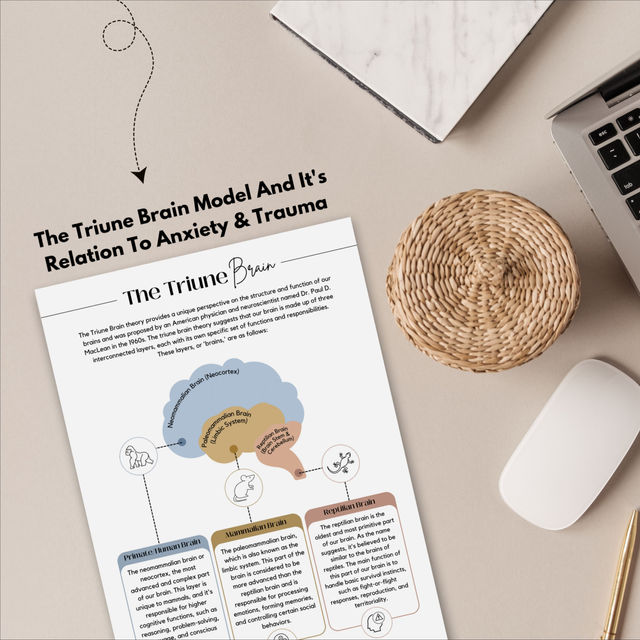


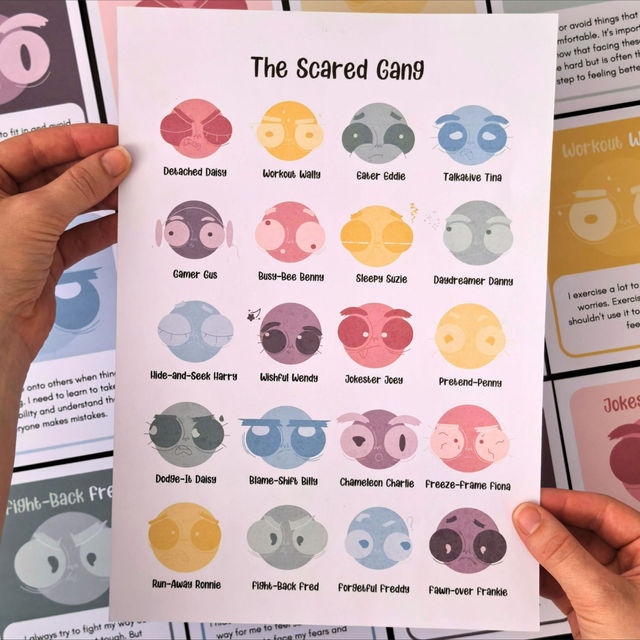


Before healing can begin, clients need to understand what happened to their brain and body. These psychoeducation resources translate complex neuroscience into language your clients can actually absorb and use.

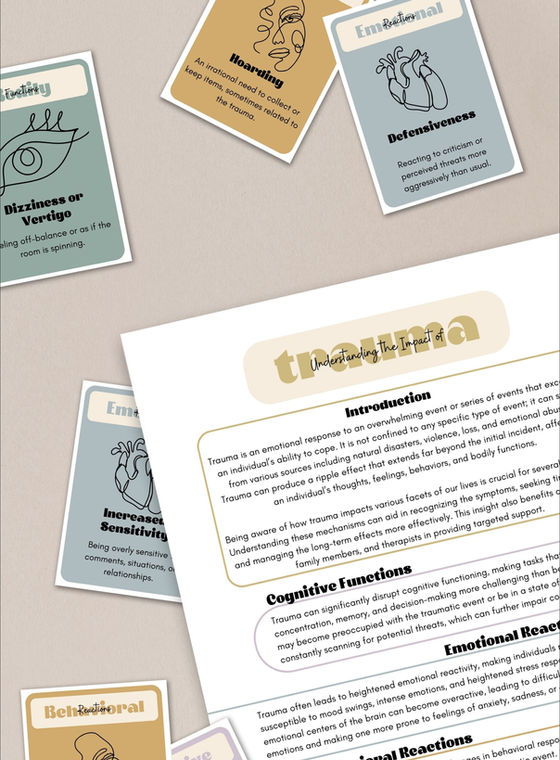
Your clients can't heal what they can't name. These tools help clients identify and articulate their own experiences, giving you a shared language and a clear starting point for treatment.


Safety is not a stage you rush through. It is the ground everything else is built on. These tools establish the foundation every trauma client needs before deeper work begins.


Regulation before processing, always. These tools give clients a practical toolkit for managing their nervous system in the moments that matter most.


The final stage of trauma treatment is about helping your client reclaim who they are. These narrative and workbook tools support integration, building a coherent story and a future that belongs to them.


Stop Piecing It Together. Start Treating with Confidence.
Get Instant, Lifetime Access to Everything Today

$267$47
One-time payment · Lifetime access
YES, GET INSTANT ACCESS FOR $47What's included:
Step 1
Step 2
Step 3

Think about the client sitting across from you this week, carrying something heavy, a nervous system in survival mode, a story that deserves to be witnessed with precision and care. Now imagine you're ready. Not scrambling. Ready, with the right tool for where they are today, and the right workbook to guide them through what comes next.
Your Next Session Starts Here
That's what the Complex Trauma Informed Resource Bundle makes possible.
JOIN HEREWe want your time on our site to feel just right for you. We use cookies (the tech kind, not the chocolate chip kind) to understand how you use our website and to keep things running smoothly. When you click ‘Accept,’ you’re giving us the okay to do that - and we truly appreciate your trust.
These cookies enable core functionality such as security, verification of identity and network management. These cookies can’t be disabled.
These cookies help us to understand how visitors interact with our website, discover errors and provide a better overall analytics.
These cookies are used to track advertising effectiveness to provide a more relevant service and deliver better ads to suit your interests.