
Anxiety & Stress Management

9 Therapy Worksheets for Young Adults Feeling Behind in Life
A 26-year-old sits across from you. Nothing catastrophic has happened. They have a job, a flat, a reasonable social life. By most measurable standards, they are doing fine. And yet the first thing they say is: "I feel like I'm behind." Behind who? Behind what? The answer, when you press on it, is vague, a composite of what their friends have, what their parents expected, what Instagram surfaces every morning, and a script about what a life in your mid-twenties is supposed to look like by now. Th
The Most Useful Therapy Worksheet Categories to Keep on Hand
You're three minutes into session and you know exactly what would help. Your client is circling the same thought loop, or they're stiff with anxiety, or they need permission to name something they've been swallowing. You open your digital folder, scan through eighteen different documents, and realise none of them are quite right. So you improvise. You sketch something quickly on a notepad. It works, but it takes energy you didn't have to spare, and you can't reuse it cleanly next time. Most ther
Why Avoiding Your Emotions Isn’t Working-and What ACT Suggests Instead
If you've ever caught yourself thinking, "I just need to stop feeling this way," you're not alone. Most of us learned somewhere along the way that uncomfortable emotions should be fixed, avoided, or pushed aside. And when that doesn't work, when the anxiety is still buzzing, or the sadness won't lift, it's easy to feel stuck or even like you're doing something wrong. But here's the thing: your emotions aren't problems to be solved. They're messengers. And trying to silence them often adds more s
Teen Therapy Just Got Easier: 700+ Tools to Help Teens Regulate, Reflect, and Reconnect
Have you ever sat across from a teen who suddenly shuts down in the middle of a conversation? Or maybe they’ve gone from calm to completely overwhelmed in seconds. One moment they’re in the room with you, the next it feels like they’ve disappeared behind a wall of silence, anger, or panic. If you’ve been there, you know how heavy those moments can feel. It can feel like holding the weight of their emotions with no clear path forward. As a school counselor or therapist, you likely see these momen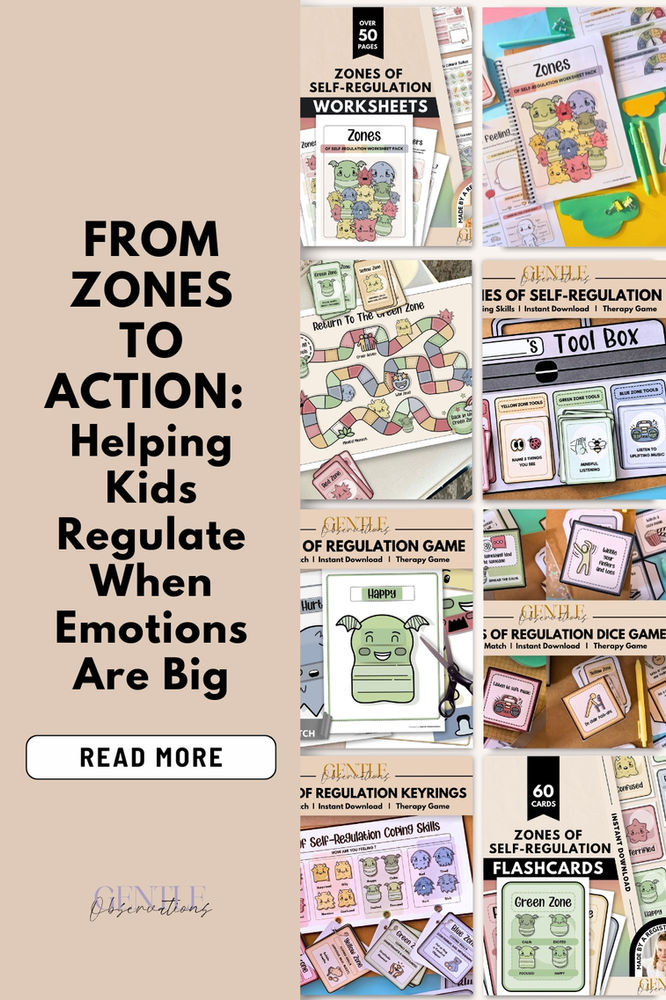
From Zones to Action: Helping Kids Regulate When Emotions Are Big
Have you ever had a student proudly point to the color zone they're in... only to spiral minutes later when something goes wrong? It can be so disheartening. You've spent time teaching the zones, hanging posters, practicing check-ins. And yet, when emotions run high, many kids freeze, act out, or shut down. Not because they aren't learning, but because there's a gap between naming a feeling and knowing what to do with it. Maybe you've seen a child correctly identify the Yellow Zone, but sit ther
6 Weeks of EBSA Support: A Gentle Framework for School Counselors
It always starts the same way: A student who’s been doing "okay" suddenly starts missing days. At first, it’s just a few here and there. Then it’s full weeks. Then they disappear from the hallways altogether. And you're left wondering: Where do I even begin? Emotionally Based School Avoidance (EBSA) can bring that quiet, sinking feeling to your day, the one where you know something deeper is going on, but you’re not sure how to reach the student without pushing too hard or too fast. You’ve proba
Inside Out 2 Tools: Building Compassionate and Supportive Classroom Communities
Why an Emotionally Supportive Classroom Matters As school counselors and educators, you know how essential it is to create a space where kids feel safe, understood, and supported. After all, a child’s emotional well-being is just as important as their academic success. Children today navigate many complex emotions, from excitement about new challenges to anxiety over upcoming tests. Helping them understand and manage these feelings is key to their overall growth, and to their ability to thrive s
15 Printable Feelings Wheels That Help Clients Finally Say “That’s What I’m Feeling”
"Some Days, They Just Don’t Have the Words" You know the look. A client stares down, shifts in their seat, shrugs. "I don’t know... just bad, I guess." And you can feel it, there’s so much going on under the surface, but the words just won’t come. Sometimes, no matter how gently you ask or how safe the space feels, naming emotions is hard. Especially when those emotions are tangled up in trauma, anxiety, overwhelm, or just years of not being allowed to feel. Maybe you’ve tried prompts. You’ve as
4 Proven Ways to Help Kids Manage Anxiety (Counselor & Parent Guide)
You see it in their eyes—the hesitation before stepping into a new classroom, the nervous fidgeting before bedtime, the tears welling up when something feels too overwhelming. For an anxious child, the world can feel like a constant wave of uncertainty, and as a counselor, school counselor, or parent, you’ve probably witnessed firsthand how anxiety can make even the simplest tasks feel impossible. Maybe it’s a child who clings to you at drop-off, afraid of what the day might bring. Or perhaps it
How to Help Kids Process Big Feelings: 10-Minute Emotional Regulation Tricks
You see it coming—the furrowed brow, the tense shoulders, the huff of frustration. Maybe it’s your child after a rough day at school, a student struggling to stay focused, or a young client feeling overwhelmed in session. The emotions are big, and they’re bubbling over. And in that moment, you ask yourself: How can I help them work through this without stepping in to solve it for them? We all want the children in our lives to develop the ability to navigate their emotions independently—to recogn
Fight, Flight, Freeze, Fawn—Which One Is Controlling Your Reactions?
Why Understanding Trauma Reactions Matters You’ve seen it happen before. Your child suddenly lashes out over something small—maybe a change in plans or a difficult homework assignment. Or perhaps they shut down completely, refusing to speak, their body tense, their eyes distant. Other times, they avoid things they used to love, suddenly clinging to you in moments that don’t seem stressful at all. It’s confusing, frustrating even. You wonder: Why is my child acting this way? What am I missing? He
Emotionally Based School Avoidance: Signs, Strategies, and Tools Every Counselor Needs
The Challenge of EBSA Emotionally Based School Avoidance (EBSA) is one of those challenges that can leave even the most seasoned school counselors searching for answers. You see a student who is bright, capable, and full of potential, yet every morning, they wake up feeling sick, overwhelmed, or paralyzed by fear at the thought of going to school. It’s not that they don’t want to learn or engage; it’s that the emotional weight of school feels impossible to bear. You’re not alone in navigating th
15 Powerful Feelings Wheels to Transform Emotional Regulation for You and Your Clients
What Are Feelings Wheels? Have you ever found yourself caught in a whirlwind of emotions, unsure of how to describe exactly what you’re feeling? Maybe there was a day when you felt something brewing beneath the surface—frustration, sadness, anxiety—but when someone asked how you were doing, all you could muster was, “I’m fine.” Emotions can be incredibly complex, and sometimes, even when we’re feeling something deeply, putting those feelings into words is tough. That’s where feelings wheels come
10 Decision Trees for Emotional Regulation: Practical Tools for School Counselors and Therapists
As educators, parents, and counselors, one of the biggest challenges we face is helping young people understand their feelings and find healthy ways to cope. Emotional regulation is key, but teaching it in a way that’s engaging and effective can feel like a daunting task. This is where Decision Trees for Emotional Regulation come in—a fun, convenient, and practical solution that simplifies the complexities of emotional responses. These decision trees work like roadmaps or “choose-your-adventure”
How Inside Out 2 Inspired Tools Can Help Kids Master Complex Emotions
Remember how Inside Out took us on a journey through the mind of a child, teaching us all about the power of emotions? Well, Inside Out 2 is back, and this time, it’s going even deeper—showing us what happens when emotions grow more complex. We all learned something from the original movie—whether it was realizing that all emotions have their place or seeing firsthand how important it is to express how we feel. But what happens when kids grow up and their emotions start to get more complicated?
7 Essential Mindfulness Breathing Exercises for Kids (Free Printable Cards Included)
Imagine a typical day in your school counseling office. You have a young student, let's call him Jake, who comes in with visible signs of distress. His shoulders are tense, his breathing is shallow, and he looks like he’s about to burst into tears. You’ve seen this before – Jake is struggling to manage his emotions, and he needs a strategy to help him calm down. This is where mindfulness breathing exercises can make a world of difference. As a school counselor or child psychologist, you already
Helping Kids Overcome Anxiety: Practical Tools and Techniques
Anxiety isn't just an adult problem; kids experience it too. But unlike adults, children might not understand what they're feeling or how to express it. Have you ever watched a child's eyes widen with worry or their small shoulders tense up with fear? Or have you ever noticed how a child who's usually full of energy and smiles can suddenly become quiet and withdrawn? You might wonder, 'What's going on in their little mind?' This is where understanding anxiety in kids becomes crucial. Anxiety in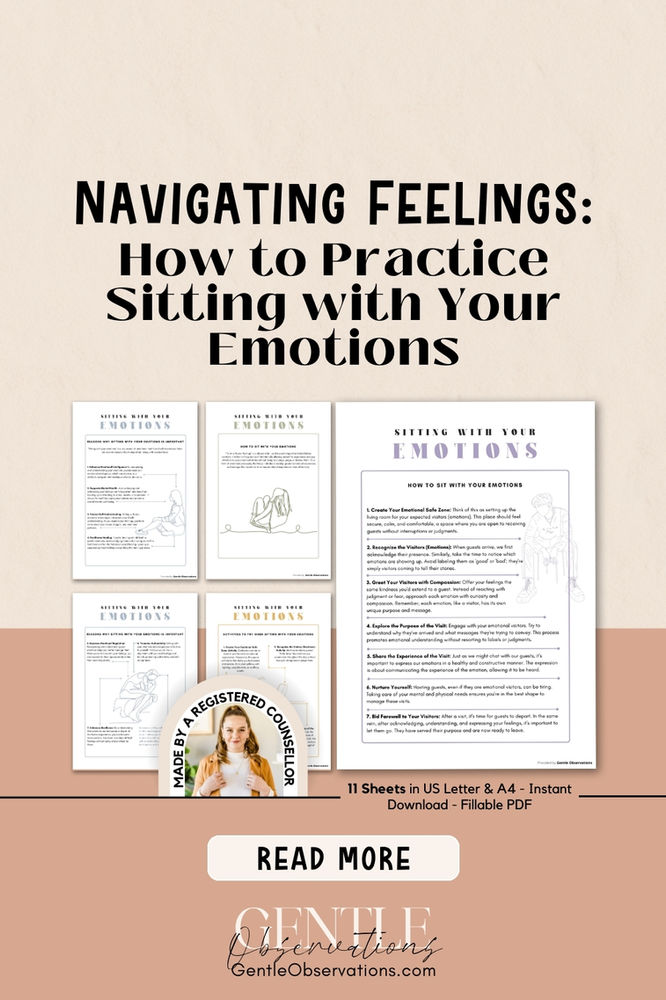
Navigating Feelings: How to Practice Sitting with Your Emotions
Welcome to our journey into the heart of our emotions. Imagine you're sitting by a gently flowing stream, watching the water pass by. Just as we observe the water without trying to change its course, we're going to explore the art of sitting with our emotions—allowing them to be, without rushing to alter them. In today's fast-paced world, we often find ourselves caught in a whirlwind of feelings, sometimes without even realizing it. Have you ever felt a wave of sadness during a rainy day but pus