
Why Psychoeducation Handouts Might Be the Most Underused Tool in Your Therapy Kit
4 min read
A practical guide to psychoeducation handouts for therapists. What they are, why they work, the different formats, and how to choose the right one for the right client moment.
Your client has just described the same pattern for the third session running. They understand it in the room with you. They nod. They can articulate it back. And then they go home, and the understanding disappears under the weight of their actual week.
It's not that they're not trying. It's that a verbal explanation in a fifty-minute session competes with everything that happens the other 167 hours. A piece of paper, a visual, a reference they can hold in their hand, does something the conversation alone can't.
That's what psychoeducation handouts actually do. Not explain things instead of you. Extend what you've already said.
WHAT COUNTS AS A PSYCHOEDUCATION HANDOUT?
The category is broader than most therapists initially think.
Infographics that break down a concept visually.
Feelings wheels that give clients language for what they're experiencing when they can't find the words.
Theory cheat sheets that translate clinical frameworks into plain language a client can actually read at home.
Acronym pages that turn a complex skill into something memorable enough to use mid-panic.
Definition lists covering terminology, conditions, or concepts clients keep encountering but don't fully understand.
Glossaries for communities and identities, like an LGBTQIA+ glossary that helps a young person feel seen, or a parent understand their child's experience better.
Some are for the client to take home. Some are for the client's family member, partner, or teacher. Some sit on your wall and do quiet work every session just by being visible. Some get handed over in the last five minutes as a thread-holder until next week.
The format varies, but the function is the same: it makes clinical knowledge portable.
WHY THEY WORK WHEN VERBAL EXPLANATION DOESN'T
Stress reduces a person's capacity to retain new information. Most of your clients are in some degree of stress most of the time. That's why they're in your office.
A psychoeducation handout lands differently because the client encounters it again outside the session. They read it at home on a Tuesday, and suddenly the thing you said on Friday makes more sense because they're calmer. They show it to a partner who has been struggling to understand what anxiety actually is. They stick the DBT skills wheel on their fridge and refer to it when they're activated, before the thought of calling their therapist even occurs to them.
The handout does the work when you're not there. That's the whole point.
THE FORMATS WORTH HAVING IN YOUR KIT
Feelings wheels. Emotion language is a genuine barrier for a lot of clients. A wheel that shows primary and secondary emotions gives them a starting point that doesn't require them to explain from scratch what's happening inside. Good for almost any presenting problem.

Theory cheat sheets. Whether it's the CBT thought-emotion-behaviour cycle, ACT's psychological flexibility model, DBT's core skills, or a breakdown of attachment styles, these translate what you're doing in session into something the client can study, share, and reference independently.


Acronym handouts. TIPP, STOP, PLEASE, HALT. Acronyms survive high-stress moments in a way that numbered lists don't. A one-page acronym handout is one of the highest-utility resources you can give a client who struggles to access skills when activated.

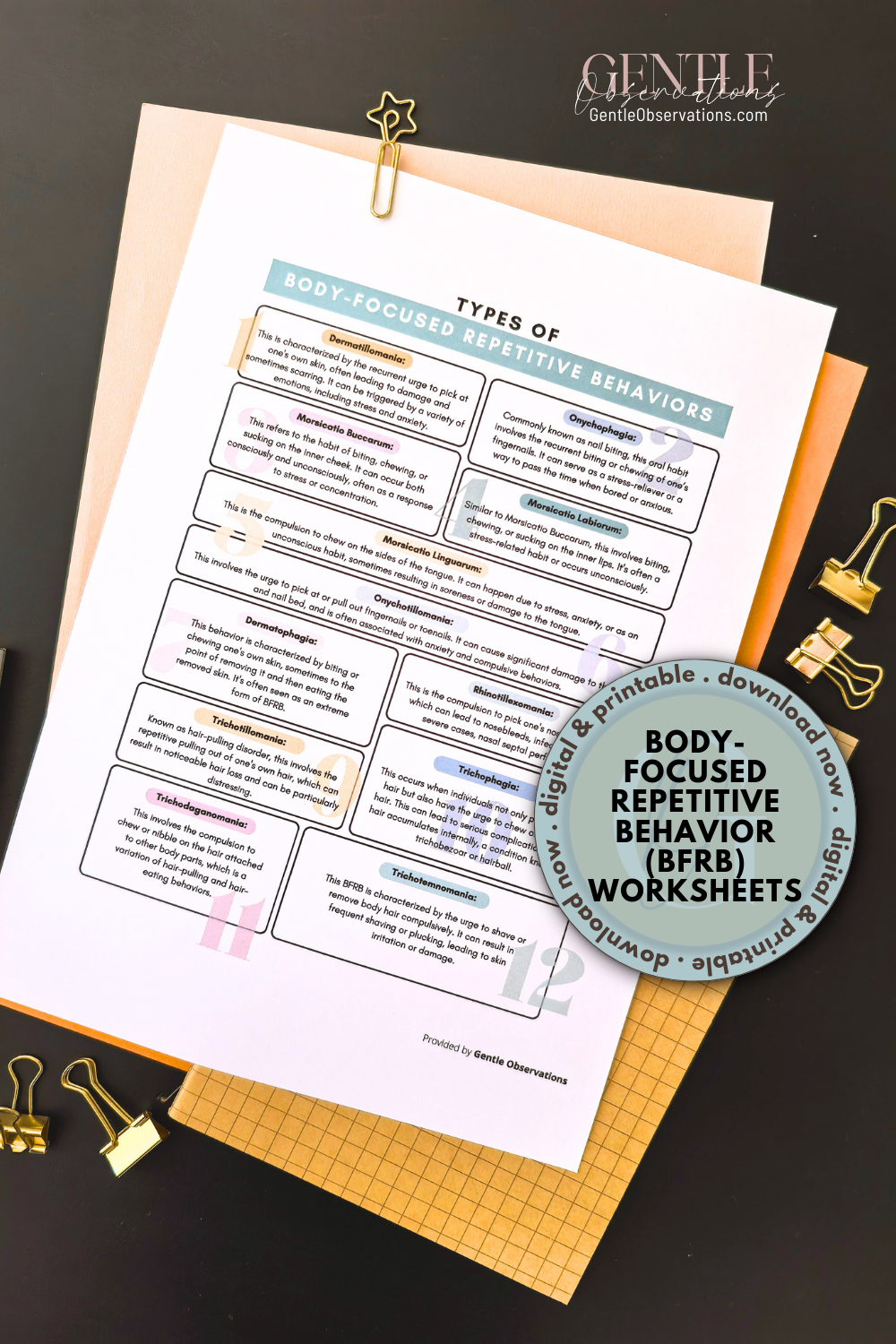
Definition and glossary sheets. ADHD trait lists, body-focused repetitive behaviour explanations, LGBTQIA+ terminology, sensory processing breakdowns. These often do dual work: helping the client understand themselves and helping the people around them understand too.

Condition and concept explainers. What anxiety is. What trauma does to the body. What dissociation actually feels like. What hypervigilance looks like in daily life. Written in plain language, these give clients a framework for what's happening that reduces shame and increases their willingness to engage.


Communication and relationship guides. Couples communication cheat sheets, boundary-setting scripts, conversation starters. These are often the handouts clients come back mentioning the most, because they directly change what happens at home.

WHEN TO INTRODUCE THEM
The timing matters as much as the content.
Too early, and the handout can feel like you're skipping past what the client came to say. In the first session or two, most clients need to feel heard before they're ready to receive information.
The moment that tends to work best is when the client has just described something they don't understand about themselves. They've noticed a pattern and they can't explain it. That's when you reach for the cheat sheet on cognitive distortions, or the handout on the window of tolerance, or the explanation of why their nervous system does what it does. The resource answers the question they're already asking.
BUILDING A COLLECTION THAT ACTUALLY GETS USED
The most useful psychoeducation toolkit isn't the biggest one. It's the one that matches your caseload.
If you mostly work with anxiety, you need the CBT thought records and the nervous system explainers and the grounding skill acronyms. If you work with teens, you need the emotion language tools and the relationship communication guides and the identity glossaries. If you work with couples or families, you need the communication frameworks and attachment style breakdowns.
Start with your most common presenting problems and build outward. The Therapy Resource Library has psychoeducation across all of these categories, including infographics, wheels, cheat sheets, acronym pages, and definition glossaries, all available to browse, download, and use with clients immediately.
There is also a growing freebie collection covering everything from a DBT Skills Wheel Poster and an Anger Coping Skills List to an ADHD breakdown, an LGBTQIA+ Glossary, a Couples Communication Cheat Sheet, and a How to Start a Positive Conversation guide. Free to access, client-ready, no prep required.
Browse the full psychoeducation collection
The Therapy Resource Library has psychoeducation handouts, theory cheat sheets, feelings wheels, acronym pages, and glossaries across every major presenting problem and therapeutic approach. Explore the full collection and find what your caseload actually needs. Join the LIBRARY and build the toolkit your caseload actually needs.

I'm Jemma, a professionally trained mental health professional and digital product creator. I've built a profitable therapy resource business from my clinical expertise. I teach other therapists to do the same, using AI tools that are safe, practical, and built for the way clinicians actually think.