
8 Executive Functioning Skills That Make or Break a Child’s School Day
8 min read
Some days it might feel like you’re just putting out fires. One child is overwhelmed before the lesson even starts, another is spiraling after a minor transition, and your plans for the session? Gone.
You’re not alone if you’ve ever sat there wondering, "Is this resistance, or is something else going on?"
Many of the struggles you see, the impulsivity, the emotional outbursts, the messy desks, the endless procrastination, aren’t signs of defiance. They’re signs of underdeveloped executive functioning skills. And while you may already be familiar with the term executive functioning, knowing how it actually shows up in real-time with kids (especially those with ADHD) is a different story.
This blog isn’t just about the theory. It’s about what those skill gaps look like in the moment, how they impact the kids you work with every day, and what you can do to gently support them, one skill at a time. You don’t need to overhaul everything. But having the right tools at the right time can make all the difference.
We’ll walk through each core executive function, offer you real examples of what to look for, and share small but effective strategies that truly help. If you already feel stretched thin, don’t worry, this approach won’t ask you to do more. It will help you do what you’re already doing, with a little more confidence and a lot less guesswork.
Along the way, we’ll show you how the Executive Functioning Workbook can support your sessions without needing a full curriculum. And if you’re looking for a more structured approach, you can always check out our blog on the 12-Week Executive Functioning Curriculum too.
Let’s take a look at what’s really going on beneath the surface.
The Behaviors You See Are Skills Kids Haven’t Mastered Yet
Even if you're already confident explaining executive functioning to others, spotting what it looks like in the moment with kids is a different experience.
When you’re in the middle of a session and a child is crumpling their worksheet, refusing to start, or crying because their partner changed the rules of a game, it’s not always easy to zoom out and think, “Which skill are they struggling with right now?”
Here’s the truth: what looks like avoidance, defiance, or emotional overreaction is often just a missing skill.
Think of executive functioning like the “control center” of the brain. When it’s still developing, everything from starting a task to switching gears becomes harder. For kids with ADHD, that control center might be slower to come online or might struggle to stay activated when they’re overwhelmed or bored. That’s not something they can fix on their own, but they can learn tools that help.
When you see big feelings, shutdowns, or constant disorganization, it’s not your fault. And it’s not theirs either. It’s just a sign they need support with a specific executive function, and that support can start small.
In the next section, we’ll walk through each skill, what it looks like in real life, and what you can try right away in your sessions.
What Does It Look Like in the Moment? A Skill-by-Skill Breakdown for Therapists and School Counselors
Let’s make it simple. Each of the skills below plays a different role in how children show up in your sessions, your classrooms, and your offices. When one is underdeveloped, the whole system feels off-balance. That’s why the solution isn’t to “fix the behavior” but to support the skill.
We’ll walk through each skill using the same format:
What the struggle looks like in real life
What tends to help
A gentle suggestion for a worksheet or page that can make a difference
You can use this as a reference anytime you’re wondering where to begin.
Self-Control: For the Child Who Blurts, Interrupts, or Hits
What it looks like:
Blurting out during lessons
Interrupting others repeatedly
Emotional outbursts that escalate quickly
Hitting, throwing, or storming off when things go wrong
Getting frustrated easily when they can't express themselves
What helps:
Visual cues like stop signs or hand signals
Breathing exercises and fidget tools
Teaching the difference between reaction and response
Praise for pausing or asking for help
Practicing role-play scenarios for safe expression
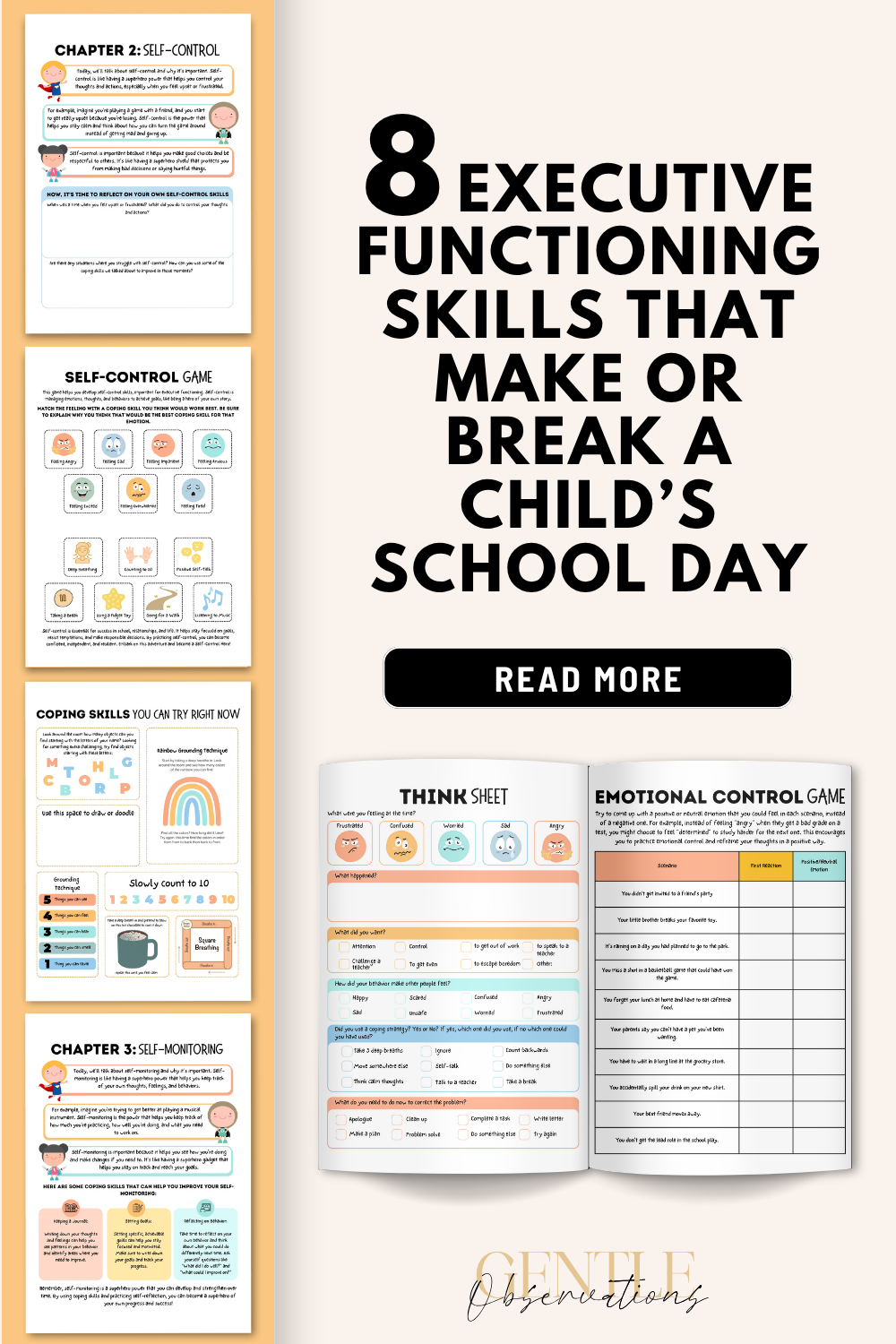
Try this tool: Use the Self-Control Game from the workbook to help children pair emotions with appropriate coping strategies. It feels like a game, but it teaches real regulation tools they can come back to later.
Self-Monitoring: For the Child Who Isn’t Aware They’re Off Track
What it looks like:
Flying through tasks without noticing mistakes
Constantly needing reminders or redirection
Saying "I did it right" even when the result doesn’t match the instructions
Struggling to track their behavior or effort across a day
Lacking awareness of how their actions affect others
What helps:
Visual checklists and "How Did I Do?" sheets
Peer or adult feedback loops
Built-in pause moments to check progress
Encouraging self-reflection over correction
Setting mini-goals and reviewing them together
Try this tool: Use the Self-Monitoring Challenge to help children identify 3–5 daily behaviors and track them for a week. They check off tasks, reflect at the end of each day, and notice patterns over time. It’s a great way to build awareness without shame.
Time Management: For the Child Who’s Always Rushing or Falling Behind
What it looks like:
Struggling to finish tasks on time
Rushing through work at the last minute
Underestimating how long things will take
Frequently off-task or distracted
Overwhelmed when given multi-step assignments
What helps:
Visual schedules and step-by-step planning
Time estimation games
Timer-based focus blocks
Using calendars and daily check-ins
Practicing how to break big tasks into timed segments
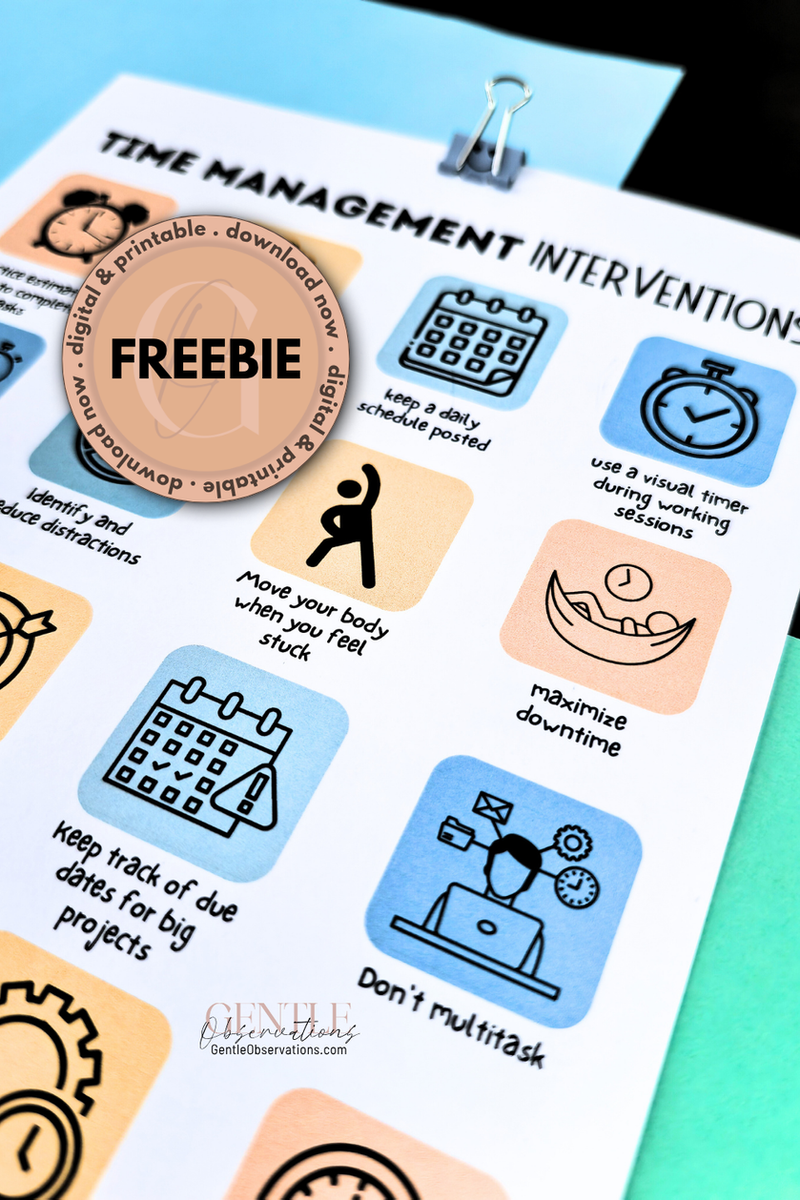
Try this tool: The Time Management Planner helps children estimate how long tasks will take, plan them out step-by-step, and reflect on what worked. It turns a vague goal into a concrete plan, and gives them a clear place to start.
💡 Want something ready to go? You can also download our free Time Management Worksheets for Kids, a mini pack pulled straight from the full Executive Functioning Workbook, perfect for getting started in sessions or sending home for practice. 👉 Download it free here


Working Memory: For the Child Who Can’t Hold Onto Instructions
What it looks like:
Forgetting multi-step directions moments after hearing them
Losing track of tasks midway through
Skipping steps or asking the same question repeatedly
Appearing distracted or confused during simple routines
Struggling with mental math, reading comprehension, or remembering verbal prompts
What helps:
Breaking instructions into smaller chunks
Visual reminders and cue cards
Teaching the child to repeat instructions back
Using memory games to build skills in a fun way
Providing written or illustrated steps alongside verbal directions
Try this tool: The Memory Game (Color Copy Challenge) on helps children practice visual working memory by recreating patterns from memory. It builds confidence while reinforcing attention and focus.
Organization: For the Child Whose Desk (and Mind) Feels Like Chaos
What it looks like:
Misplacing materials, assignments, or personal belongings
Struggling to keep a desk, locker, or bag tidy
Jumping from one task to another without completing anything
Having difficulty breaking tasks into smaller steps
Forgetting what supplies are needed or leaving them behind
What helps:
Creating simple systems for schoolwork and personal space
Using checklists for materials and steps
Establishing daily routines for packing up and cleaning
Sorting tasks by category or color
Encouraging visual organization through drawings or charts
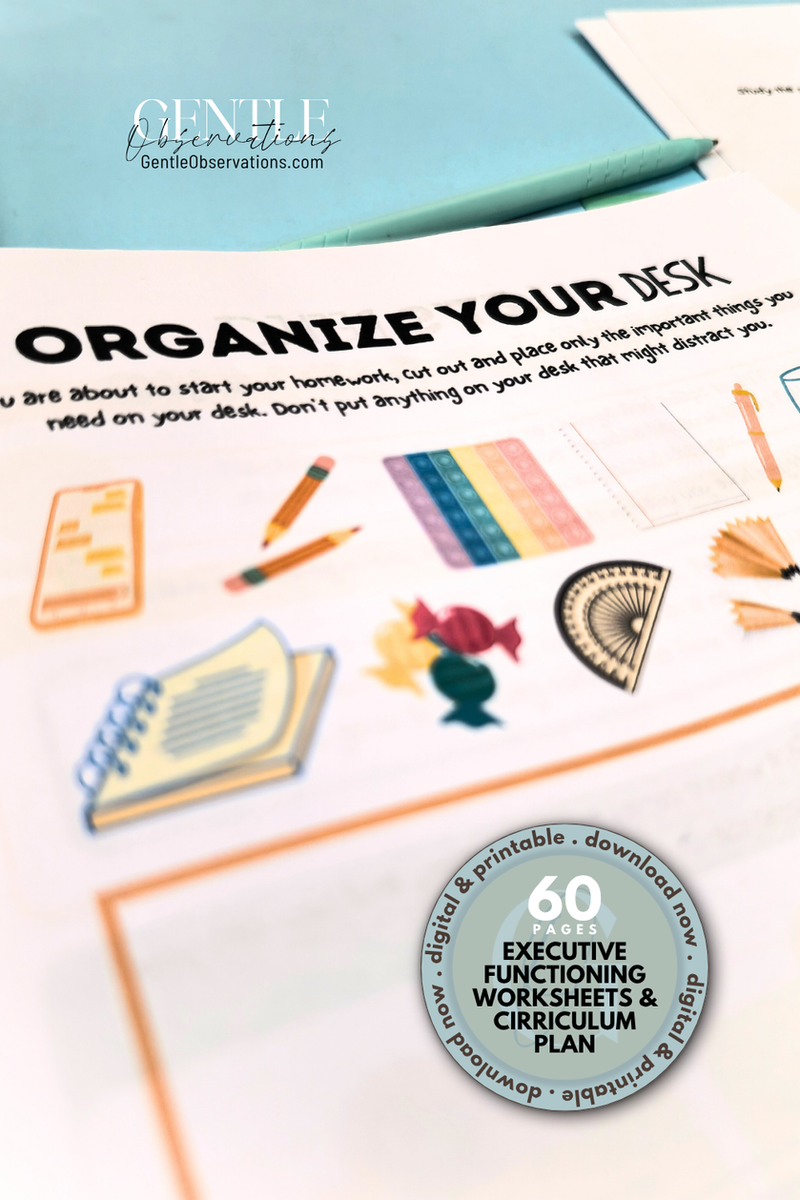
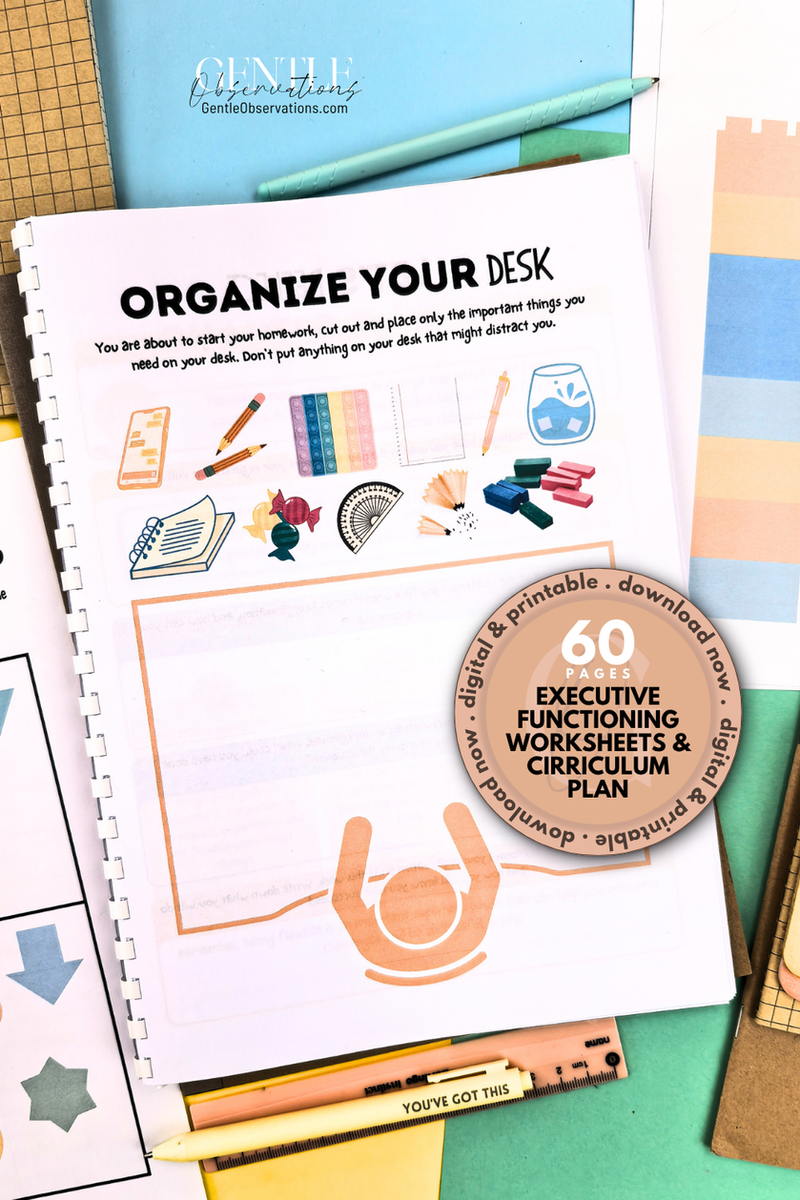
Try this tool: Use the Organize Your Desk activity to guide children in thinking through what belongs on their workspace and what creates distractions. It helps them practice decision-making and develop ownership of their environment.

Flexibility: For the Child Who Can’t Handle a Change in Plans
What it looks like:
Melting down when routines are disrupted
Refusing to switch tasks or try something new
Getting stuck on rules or fairness in games
Insisting things must go “just so” to feel okay
Struggling with transitions or unstructured time
What helps:
Rehearsing what to do when plans change
Visuals or scripts to talk through new scenarios
Building “Plan B” thinking skills
Practicing mindfulness or calming techniques
Celebrating adaptability when it happens
Try this tool: Use the Flexibility Challenge to walk through real-life examples of unexpected changes. Children brainstorm alternative plans and practice adaptive thinking in a safe, structured way.
Task Initiation: For the Child Who Just Can’t Get Started
What it looks like:
Staring at a blank page or not picking up materials
Delaying tasks until the last possible moment
Saying “I don’t know how” as a way to avoid starting
Needing frequent prompting to begin even simple steps
Freezing up when presented with something new or challenging
What helps:
Breaking the first step down to something tiny
Using visual checklists or “First, Then” boards
Setting short timers to create a starting window
Encouraging effort over outcome at the beginning
Celebrating the moment they begin, not just when they finish
Try this tool: The Ready, Set, Go Challenge turns task initiation into a game. Children have 10 minutes to complete a playful series of mini-tasks, helping them build confidence and momentum.
Emotional Control: For the Child Whose Feelings Take Over the Room
What it looks like:
Big reactions to small problems
Crying, yelling, or shutting down quickly
Difficulty calming down once upset
Frequent arguments with peers or adults
Trouble identifying or expressing emotions with words
What helps:
Teaching and practicing calming strategies in advance
Using visuals like feelings wheels or coping cards
Helping name emotions as they arise
Modeling emotional regulation and co-regulation
Providing safe, quiet space for de-escalation when needed
Try this tool: Use the Emotional Control Game, where children replace automatic reactions with more regulated responses. It’s a fun, low-pressure way to practice real emotional skills in a safe space.
The Executive Functioning Workbook for Kids
This week’s featured resource is one I find myself recommending again and again: the Executive Functioning Workbook for Kids. It’s designed specifically with ADHD and executive functioning challenges in mind, and it brings together all the tools you’ve seen throughout this blog into one cohesive resource.
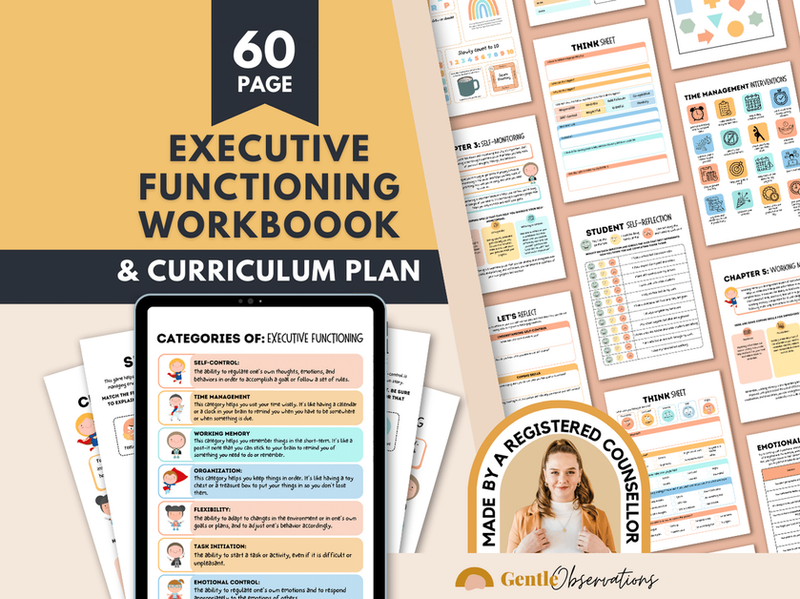


Whether you're supporting one child or a small group, it gives you ready-to-use worksheets that target each executive skill area. Each page is developmentally appropriate, visually engaging, and easy to implement; no extra prep needed.


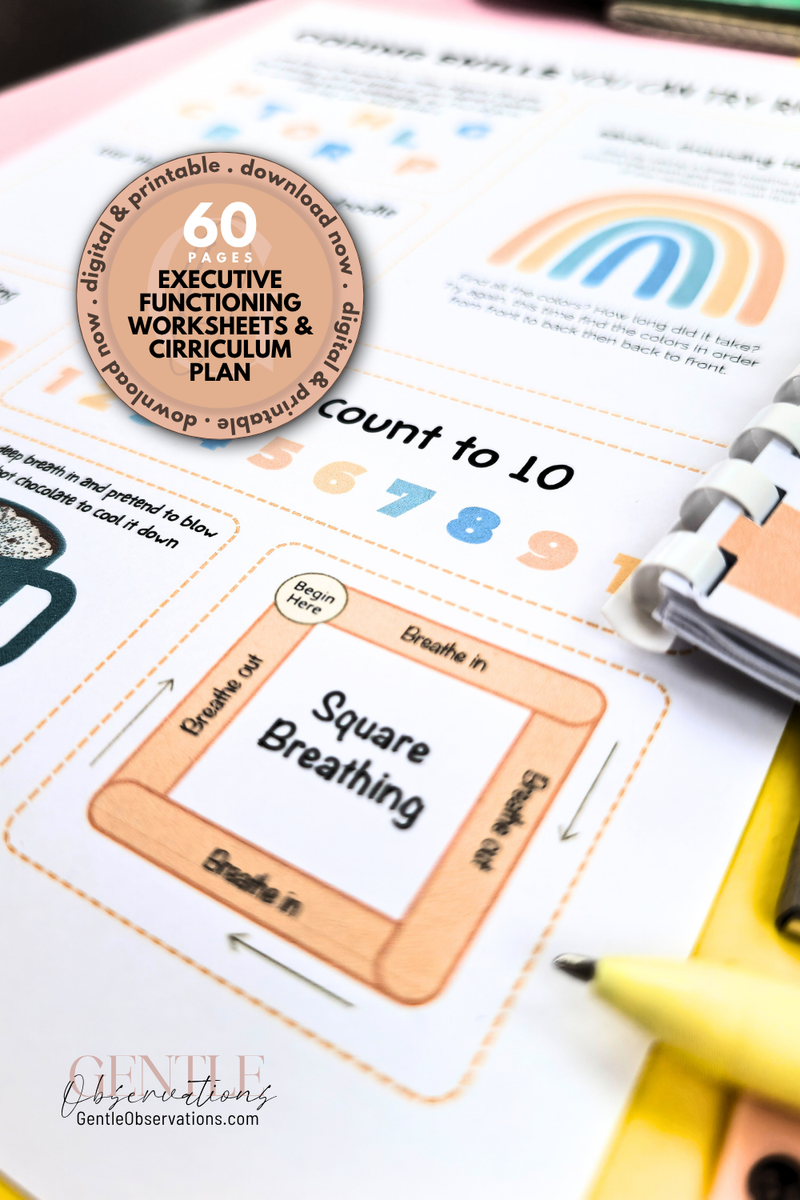


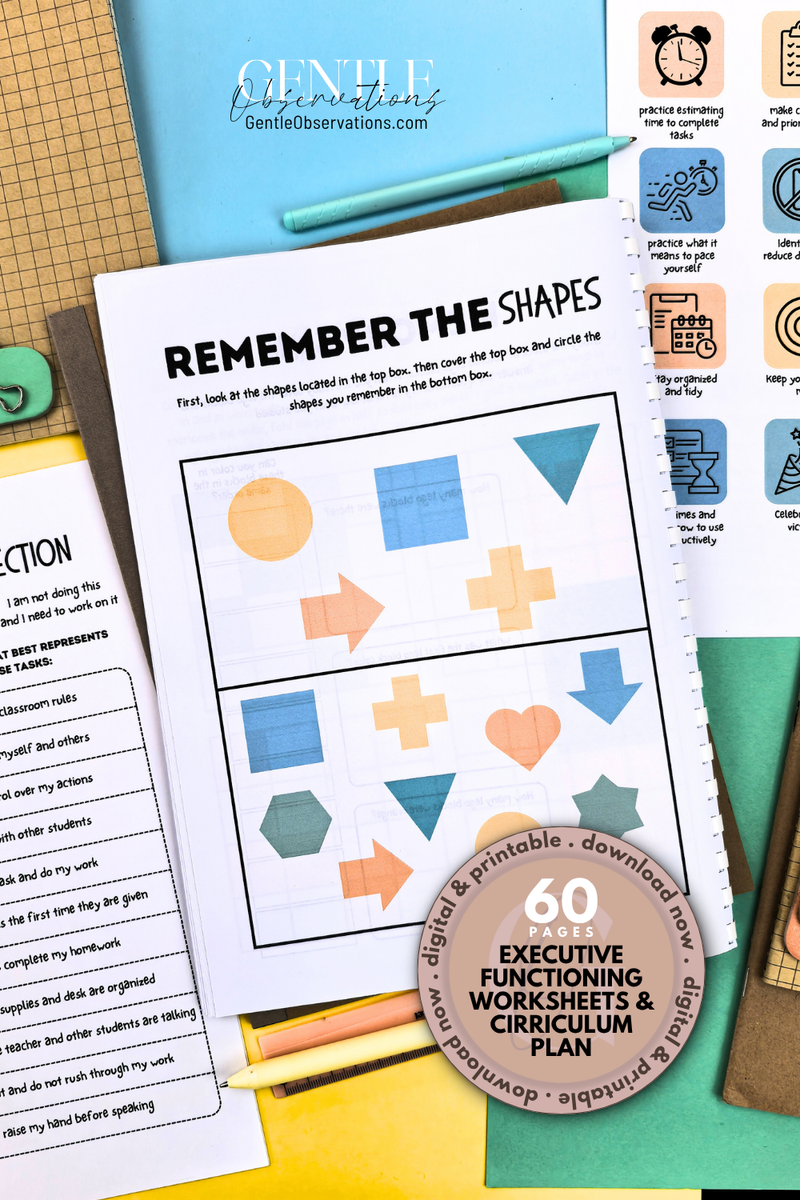

Inside, you'll find:
Easy-to-understand worksheets for all 8 executive skills
Thoughtful reflection pages and practical mini-challenges
Hands-on visuals that help children grasp tricky concepts
Activities that work in one-on-one, classroom, or counseling settings
Flexible use: complete activities in any order, based on student needs
It’s available as both a printable PDF and a fillable digital version, so whether you prefer to print out pages for a binder or work through them digitally during sessions, this resource adapts to your style.
It’s the kind of tool you’ll find yourself reaching for again and again, especially when you’re stretched for time and want something that truly works.
👉 View the Executive Functioning Workbook here 👉 Or access it in the Therapy Resource Library
Print the page you need, jump right in, and let this workbook take one thing off your plate so you can confidently support your students today.
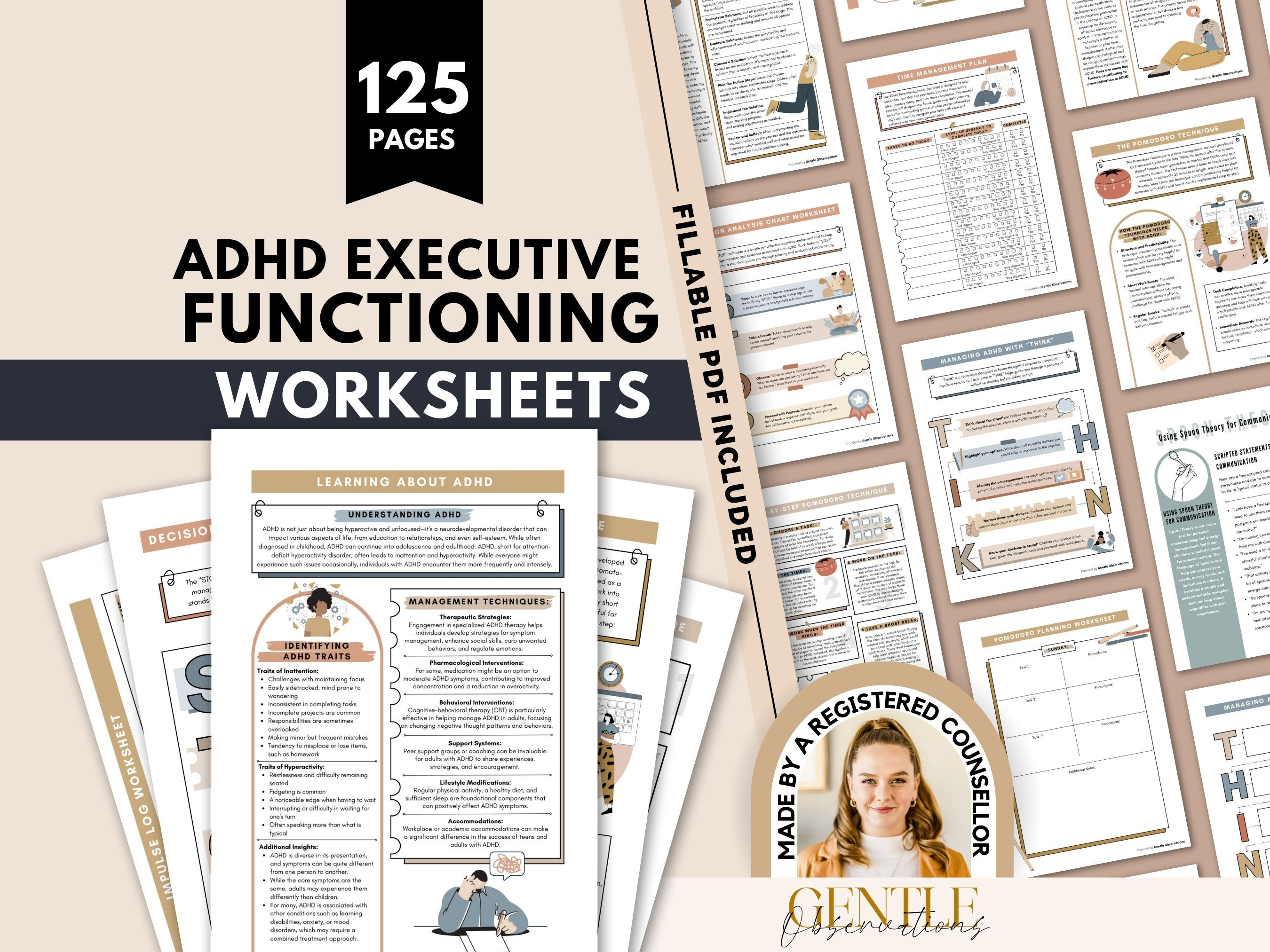 Executive Functioning ADHD Workbook for Adults & Teens$10.00Buy Now
Gentle Observation: Some days, supporting kids with executive functioning struggles feels like trying to help someone navigate a maze with a blindfold on. They want to succeed, they just can’t see the path. That’s where tools like this workbook become something more than paper; they become a shared language. A way to pause, reflect, and move forward together.
I’ve seen firsthand how even one small success, like a child remembering their materials for class or taking a breath before reacting, can ripple outward. These moments build confidence and connection. And they remind us why we do this work.
Whether you’ve been using executive functioning strategies for years or are just starting to build this area of your toolkit, I hope this blog and resource help make the process a little easier. You’re not just teaching skills, you’re building belief.
Jemma (Gentle Observations Team)
P.S. Want something you can use right away?
Grab the free Time Management Worksheets for Kids — a helpful mini-pack pulled from the full workbook. 👉 Download your freebie here
P.P.S. If you're a member of the Therapy Resource Library, the Executive Functioning Workbook is already available to you. Just head over to the Executive Functioning Workbook page
Not yet a member? The Therapy Resource Library gives you access to this workbook and so many other ready-to-use tools to simplify your sessions. Learn more and join here.
P.P.P.S. If you found this blog helpful, you might also enjoy reading 12-Week Executive Functioning Curriculum: A Complete Guide for School Counselors.
Executive Functioning ADHD Workbook for Adults & Teens$10.00Buy Now